I Never Thought I Was an Athlete
What my first powerlifting competition taught me about strength, belonging, and taking up space
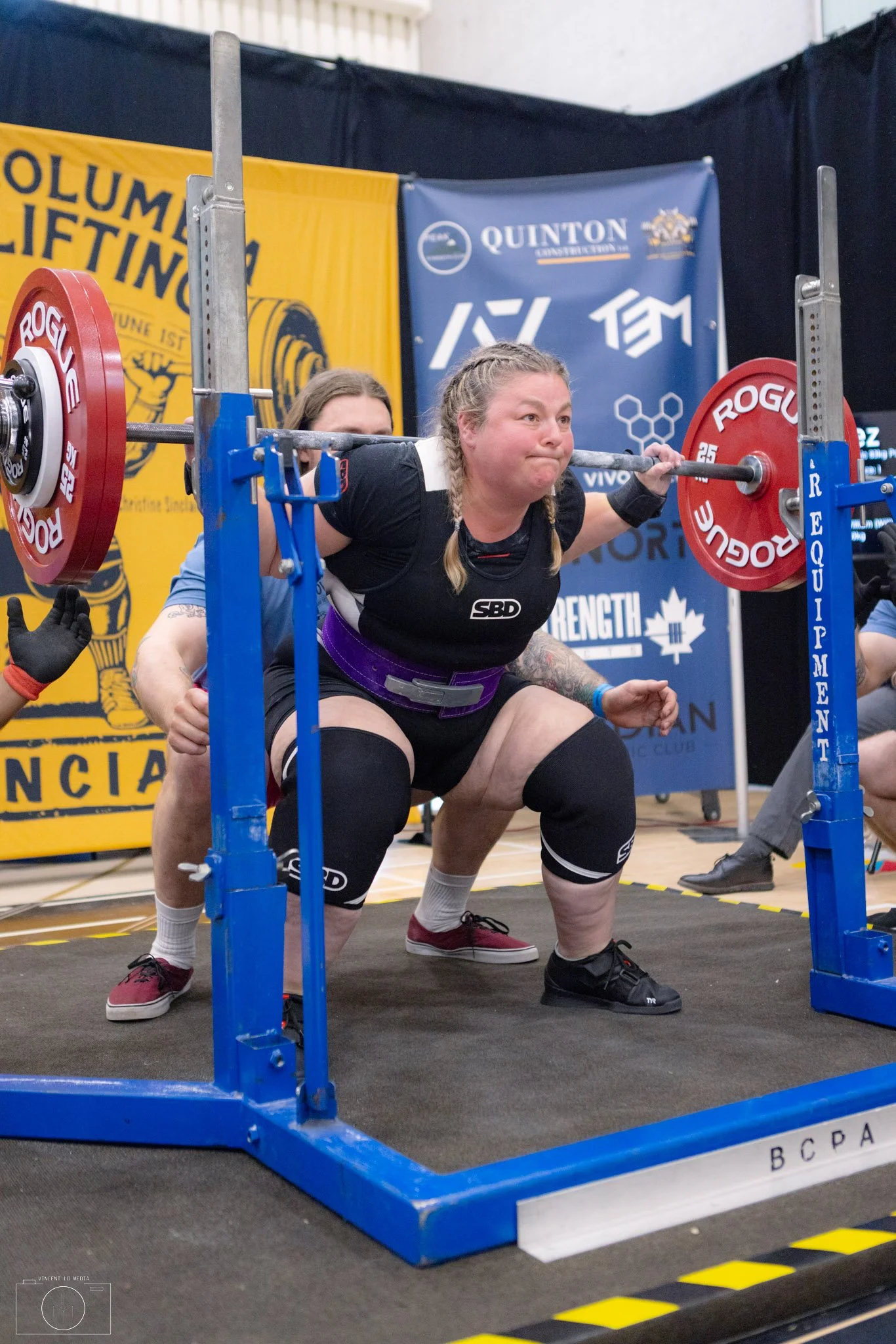
“The bar is loaded for Laura Reimer.”
I rub my chalked hands together, even though they’re already dry. My stomach is tight; that nauseating mix of nerves and adrenaline sitting heavy in my chest. My coach reaches up, pulls off my headphones, looks me straight in the eye.
“You’ve got this Laura. Just go for it.”
I nod.
This is my third deadlift attempt. 300 pounds. A personal best at the time. My last lift of my first competition.
A part of me is thinking, just get through this; another part is louder. Holy shit. I’m actually doing this.
I step up to the bar and feel the weight of more than just the plates in front of me. Because this moment didn’t start here, it started years earlier, with a version of me who would never have believed this was possible.
I didn’t grow up as an athlete. I didn’t see myself that way, not even a little bit. I was the nerd, the self deprecating comedic relief. When I first started going to the gym in my late 30s, I felt like I didn’t belong there. Like everyone else knew what they were doing, and I was just trying not to get in the way.
Even after I had lost weight, even after I was managing my PCOS symptoms and doing “all the right things,” that voice remained:
You’re still that person.
You don’t belong here.
You’re going to fail. People are going to see it.
That voice was convincing, and for a long time, I believed it.
It would have been easy to stay in that headspace. To keep doing what felt safe. To avoid anything that might expose me as not strong enough, not experienced enough, not “athletic” enough.
But something shifted when I started working with a trainer who saw something in me that I couldn’t see in myself.
“You’re getting really strong,” she said. “You’re ready for more of a challenge. Why not try a barbell?”
That suggestion could have gone either way; I could have brushed it off. Stayed where I was comfortable. Instead, I said yes.
I was intimidated. The barbell felt heavy and awkward. The movements were unfamiliar. The environment still felt like a place I was trying to earn my spot in.
But I kept showing up.
I learned the basics. I started reading about powerlifting, about what the body is capable of when you train it for pure strength. I was fascinated by how people could lift such enormous weight for their size. I got a new coach who specialized in strength. I was inspired by other lifters, women who looked like me, dominating a sport.
And somewhere along the way, something started to change. Not overnight. Not all at once; but I began to feel it.
Strength.
Not just in my body, but in how I carried myself. In how I moved. In how I showed up.
I started to take up space.
I remember the first time someone at the gym came up to me and said, “Jeez, you’re strong. You lift so well.” I smiled, said thank you, played it off. Said it was because I had great coach who just told me what to do. Then I got in my car and cried.
Because for the first time, I felt like I belonged. That moment stayed with me. I still think of it from time to time.
And it’s the reason that standing on that competition platform, about to attempt a 300 pound deadlift, meant so much more than just hitting a number.
It was proof that I had become someone I never thought I could be.
An athlete.
Someone who belongs.
Someone who doesn’t stay in the safe zone.
When I grabbed the bar, I wasn’t just lifting weight. I was lifting every doubt I had carried with me into that gym years before.
And regardless of what happened with that lift, I had already won something bigger.
I had shown up.
I had tried.
I had become stronger, in every sense of the word.
That’s what powerlifting gave me.
Not just numbers. Not just a competition.
It gave me a way back to my power.
And here’s the part that matters if you’re reading this and thinking, ‘that’s great for you, but that’s not me’. I didn’t start this because I felt strong; I started in-spite of it.
You don’t need to step onto a competition platform to feel this. You don’t need to lift 100 pounds, but you do need to challenge the version of you that believes you don’t belong, that you’re too late, that you’re not capable of more.
Because that version of you is not the truth. It’s just the loudest voice. Strength, real strength, is built when you decide to show up anyway.
Even when it’s uncomfortable.
Even when you’re not confident.
Even when a part of you is convinced you’re going to fail.
That’s how I train now and that’s the message I share with others.
Not just helping my clients to get stronger physically, but helping them rebuild that trust in themselves. To take up space. To stop waiting for the perfect time, the perfect plan, the perfect version of themselves before they begin.
Because that version doesn’t come first.
She’s built; one rep, one decision, one hard moment at a time.
Just like that lift.