When Doing Less Made Me Stronger
Building Strength Through Midlife: Part 4 of 4
A series exploring how women can adapt their training, nutrition, and mindset to build strength that lasts through midlife and beyond.
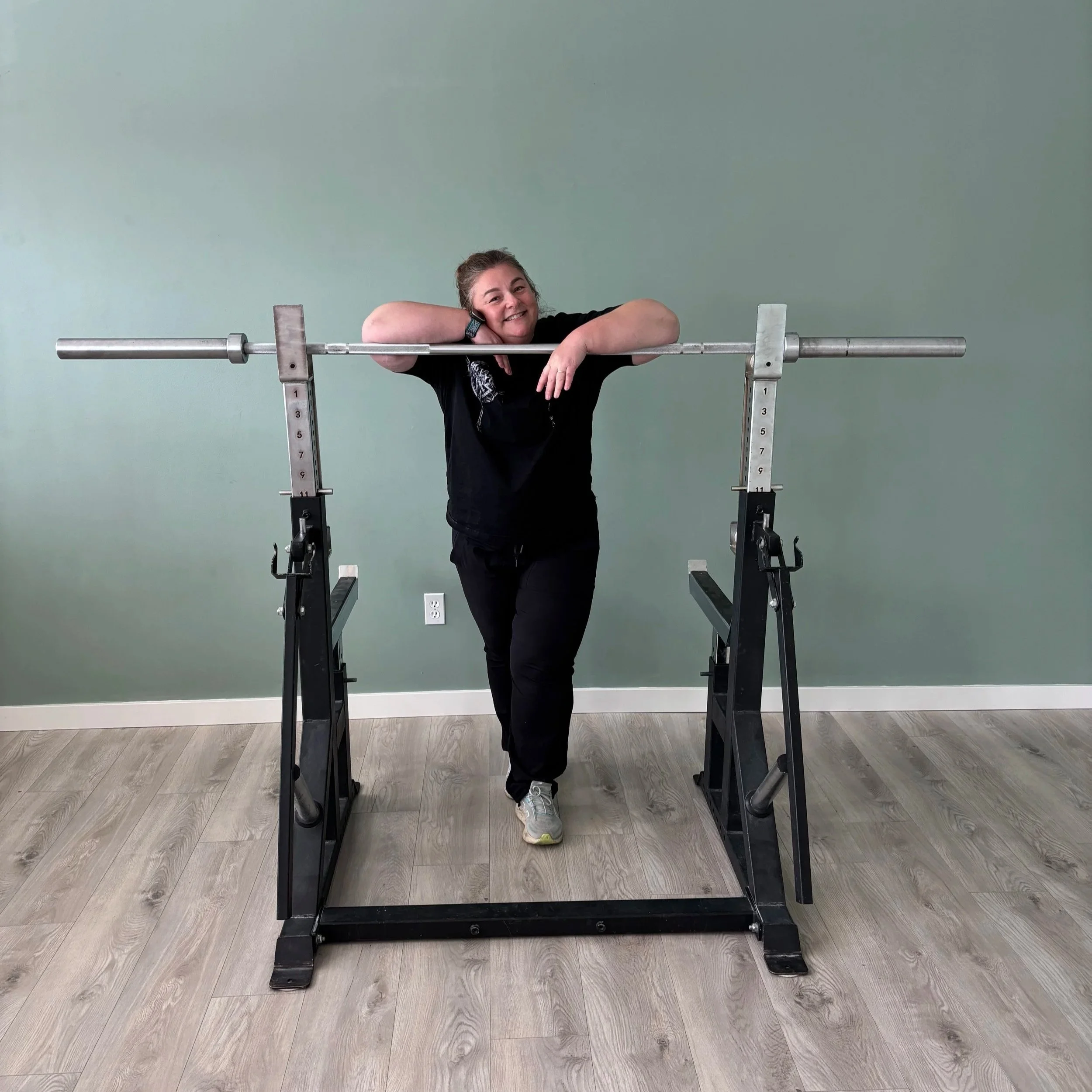
For years, I believed that becoming a stronger athlete meant doing more. More training sessions. More volume. More work. More grind.
If someone had told me a year ago that reducing my training schedule would lead to one of the best competitions of my career, I probably wouldn’t have believed them. Like many women, I had bought into the idea that progress came from constantly pushing harder. After all, I’m a powerlifter. Hard work is part of the sport. But last fall, I realized I wasn’t recovering properly between my training sessions anymore. And that realization changed everything.
The signs were there. I just wasn’t listening.
After a major competition last fall, I settled back into my usual routine of training four to five days each week. On paper, my program was well designed. It included recovery days and was built by a very knowledgeable strength coach whom I trust.
But something wasn’t right. Each week, I would arrive at my first training session still feeling like I hadn’t fully recovered from the week before. My energy never seemed to fully come back. I felt flat under the bar. Progress became harder to achieve. I found myself relying more heavily on caffeine and pre-workout supplements just to feel like I could get through my sessions.
Outside the gym, I had very little left in the tank. Even activities that normally helped me recover, like going for a walk or riding my bike, felt like too much.
Perhaps the hardest part wasn’t the fatigue. It was watching my motivation slowly disappear; not because I didn’t love powerlifting anymore, but because every workout felt like another uphill battle.
My first instinct wasn’t to train less
I’ll admit it.
Reducing my training wasn’t my first thought. Like many athletes, I assumed there had to be something else I needed to do. Maybe I needed to eat differently. Maybe I needed more supplements or I needed to work harder on recovery. Maybe I just needed to stop complaining to my gym buddies and just push through until it got easier again.
So I talked with my coach. After explaining what I was experiencing, he suggested something I wasn’t expecting. Train three days a week instead of four. Prioritize recovery. See what happens. Simple advice…Not an easy pill to swallow though.
Why training less felt scary
Reducing my training volume felt like admitting defeat. I worried I would lose strength and that my progress would stall. I worried that if I stepped away from my rigid schedule, I’d lose the consistency that had helped me become a competitive athlete in the first place.
There was another mindset I had to confront. As a fitness professional, I felt an unspoken pressure to always be training. I worried that reducing my workouts would make me look less committed, less disciplined, or even less credible. Looking back, I realize that those fears had nothing to do with becoming a better athlete and everything to do with the story I was telling myself about what a fitness professional "should" look like.
What happened surprised me
Within a few weeks, things started to change. Instead of dragging myself through workouts, I actually looked forward to them. I had enough energy to enjoy evening activities with my family. I could complete my mobility work and accessory exercises instead of simply trying to survive the main lifts.
Most importantly, I started making progress again. The bar moved faster, my strength improved, and training became enjoyable.
By the time my next major competition arrived in March, I felt stronger, more prepared, and more confident than I had in months.
Ironically, doing less allowed me to perform more.
I finally started applying my own advice
Looking back, I realized something almost embarrassing. I had written three articles encouraging women to listen to their bodies but hadn’t fully applied those lessons to myself.
In Part 1, I talked about autoregulation and training the body you have today. With fewer weekly sessions, I finally gave myself permission to do exactly that. If I woke up feeling energetic and well recovered, I leaned into that session. If I felt tired or my warm-ups told me my body wasn’t ready for heavy lifting, I adjusted. And instead of viewing those days as failures, I used them to focus on technique, mobility, or movement quality. The pressure to “crush” every workout disappeared.
In Part 2, we talked about symptoms being signals, not setbacks. My fatigue wasn’t telling me I lacked discipline. It was trying to tell me that my recovery capacity had changed. Ignoring that message wasn’t doing me an energetic favours.
And in Part 3, we explored nutrition as more than simply eating more protein. Recovery isn’t just about taking a day off. It’s supported by quality sleep, adequate nutrition, managing stress, and giving your body the resources it needs to adapt to training.
None of these principles worked in isolation but together, they allowed me to train better.
My definition of a successful athlete has changed
I used to admire the athletes who trained the most. Now I admire the athletes who train the smartest. Because best athletes aren’t necessarily the ones who accumulate the most hours in the gym. They’re the ones who understand how to balance challenge with recovery. They’re the ones who can adapt when life changes. They’re the ones who recognize that consistency isn’t about repeating the exact same week forever. It's about continuing to move forward by adapting your approach as your body, your life, and your priorities evolve.
The lesson I’ll carry forward
I still have moments where that old “all-or-nothing” mindset creeps in. Sometimes I still feel guilty or get frustrated when my training doesn’t look the way it did three years ago. But then I remind myself of something this past year has taught me; training is only valuable if it allows you to recover well enough to train again.
Progress doesn’t come from collecting workouts. It comes from accumulating quality training over months and years.
Aging doesn’t mean you have to stop challenging yourself. It doesn’t mean you have to keep pushing harder, either.
There is another option.
Listen.
Adapt.
Train the body you have today.
Because strength isn’t measured by how much you can force your body to endure; it’s measured by how well you learn to work with it.
And if there’s one thing I hope you’ve taken away from this series, it’s this: Your body is not asking you to lower your expectations; it’s asking you to change your approach. When you learn to do that, strength doesn’t disappear with age. It evolves.